WCP Join the hub
Service design Problem solving Systemic design Product design Case 01 - Food insecurity @WCP_World_Change_Project
Case 01 / Beta

Food insecurity

Autonomous food-production systems for areas at risk. This page is the whole beta: the problem, the system, the experiments I have run so far, the plan, and what is still open.

6 modules, A to F MVP: Module D On site: Jan 2027 to Mar 2028 (hypothesis)
The problem and its main causes
7.8%

of the world's population, about 645 million people, faced hunger* in 2025.

*People who regularly don't get enough food to live an active, healthy life. Source: FAO, SOFI 2026 (via IFPRI Food Security Portal).

Armed conflicts Wars and guerrilla conflicts, such as those in Sudan, the Sahel region, Ukraine and the Middle East, devastate farmland, destroy rural infrastructure and block distribution channels.
Climate change Prolonged droughts (especially in parts of East Africa), sudden floods, heat waves and landslides sharply cut harvests and impoverish herders by destroying pastures.
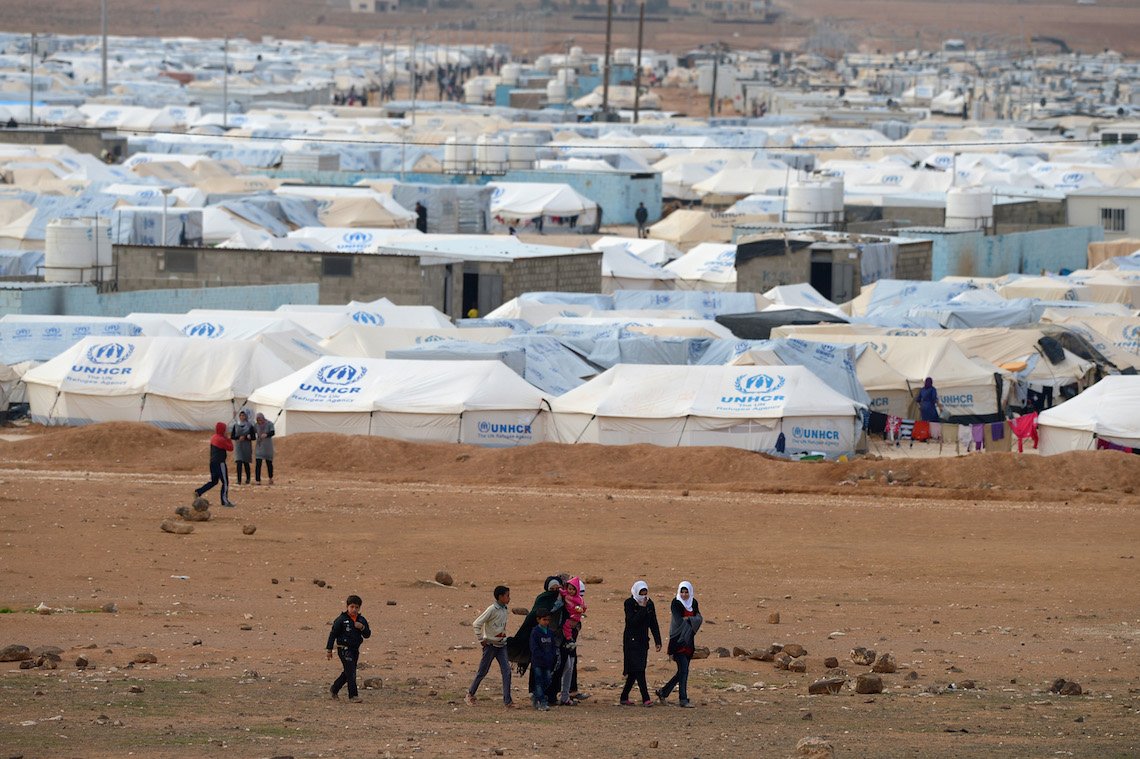
Rows of white UNHCR tents in the Za'atari refugee camp, with a few people walking across the bare ground in the foreground
Za'atari refugee camp, Jordan: the kind of context where food depends on aid and where autonomous systems could matter. Source: LifeGate.
Where I would like to build it

The border area with Ukraine.

This is a hypothesis, and the area is indicative. To define it I need to weigh factors such as water accessibility, general security and the presence of NGOs, among others.

Water accessibility
General security
Presence of NGOs
And more to define
The system

Six modules that grow, process and store food.

Four production modules (A to D) feed two support modules (E and F). Pick a module to see what it holds, what it could yield in a year, and how many portions that makes.

{{renderAlt}}
{{mName}} {{mKind}} {{mCount}}
Example outputs
{{o.name}}
Yield in a year
Species{{unitsLabel}}Cycles / yrAnnual kg
{{r.name}}{{r.units}}{{r.cycles}}{{r.kg}}
Total{{total}}
{{note}}
Portions per year
GroupAgePortionPortions
{{p.cluster}}{{p.age}}{{p.grams}}{{p.count}}
Calculated on a harvest of {{harvestKg}}. Portion sizes follow SINU and LARN (Italian nutrition reference values).
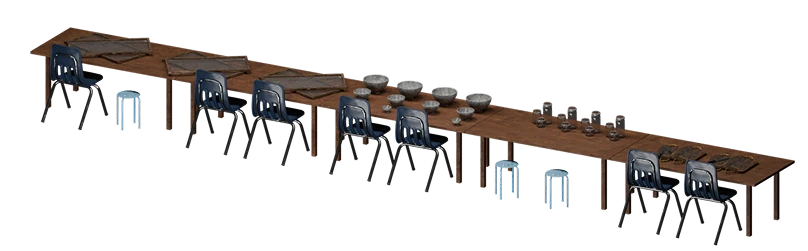
3D render of Module E: work tables, chairs and stools with bowls and trays. Module E Food processing system Work tables and seating where the harvest is prepared. Details still to be developed.
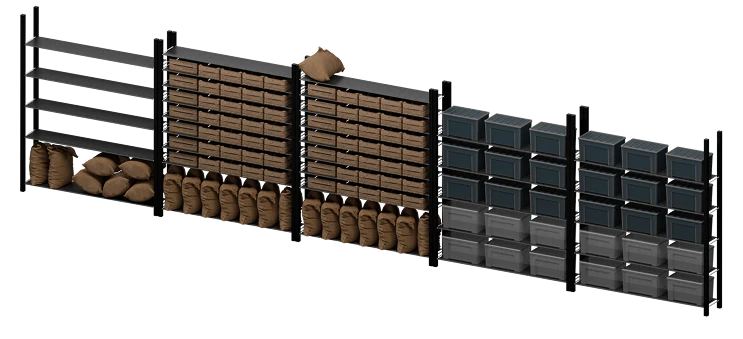
3D render of Module F: shelving with crates, boxes and sacks. Module F Food preservation system Shelving, crates and sacks to store food after harvest. Details still to be developed.
Is this system new? Not entirely. Similar ideas have been tried in other camps and fragile areas. The reference cases show what they achieved and what I would change.
See the reference cases